Seeding the Rebels
Falsifiability, confirmation holism, and heuristics for contrarian investors
What is Falsifiability, and Why Should We Care?
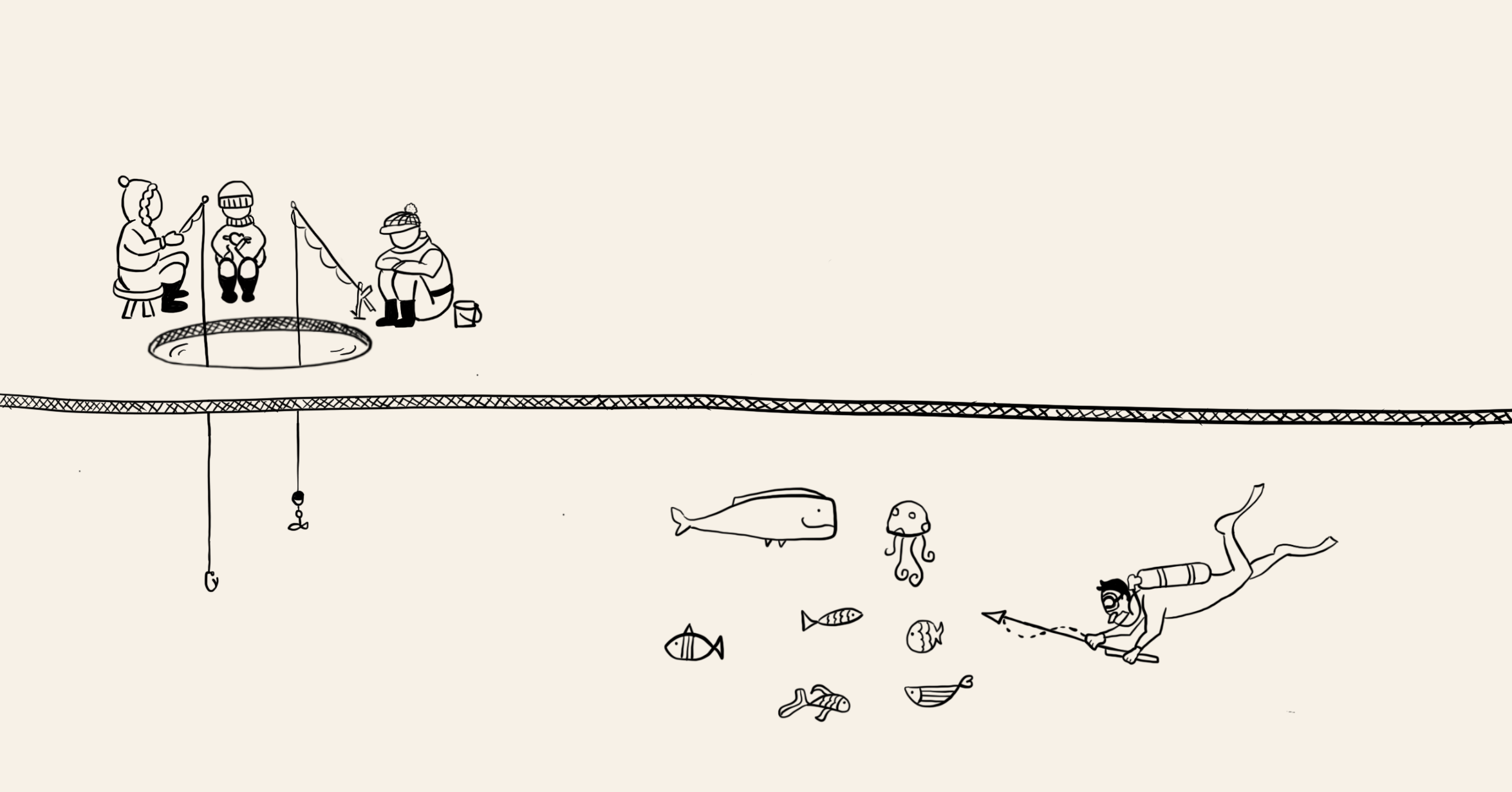
Falsification is associated primarily with Popper (1934), who used it to demarcate metaphysical and scientific statements. He proposed that a scientific statement was one that could conceivably be refuted by incoming, observable evidence from nature. For a theory to be scientific, it must say what it allows in the way of incoming data and also what it forbids. A simple theory that made very specific and risky claims was therefore preferable over a theory that could explain all possible observations because the latter could then illogically arrive at contradictory conclusions using the same premises. As O'Hear (1989) puts it, a theory compatible with many worlds will tell us little about the specific characteristics of this one. Falsifiability helps us hone in on theories that truly hold explanatory power by eliminating systems of statements that do not actually expose themselves to the demands of nature. Think back to when your favorite conspiracy theorist friend from high school would hit you with one of their classics like, "Don't you see? That's exactly what they would do to cover it up!" Popper might've asked these types, "Under which observed conditions then, would you be willing to give up on your original position?"
The reason we would want to be concerned with falsifiability is because our knowledge of reality is perhaps best explained by intersubjectivity. What intersubjectivity substantively implies is that meaning is created based on one's position of reference, and socially mediated through interaction. Simply put, the formation of concepts is dependent on observations of the universe only just as much as the observations are dependent on the concepts used to observe. Those familiar with Husserl's phenomenology (1988), Weber's value-ladenness (1949), or Habermas' communicative rationality (1997) will be very familiar with these notions. Returning to the level of epistemology then, we can see that there ought to be a reliable criterion of demarcation between scientific and pseudo-scientific theories because the stakes are quite literally world-shattering. After all, what could be bigger than reality itself?
Confirmation Holism: The Achilles Heel of Falsifiability?
For all its seeming logical-solidity, an initial concern with falsifiability is nevertheless brought about by the problem of confirmation holism. In his 'Two Dogmas of Empiricism', Quine (1951) fleshes out this notion of confirmation holism thus: scientific sentences lack empirical content when considered in isolation from other sentences. They do not by themselves imply observation categoricals (sentences implying a generality prior to any objective reference, i.e. sentences of the form IF X, then Y; if there's smoke, then there's fire). They only have the power to do so when considered within the context of an entire set of sentences — what we might call a scientific theory.
Take, for example, the statement that most living plants produce oxygen in the presence of sunlight. This is true of most living plants, but false of some plants that are parasitic on other plants, and of some plants which extract their nutrients from dead organic matter. The general claim on its own, however, implies no observation sentences or synthetic observation categoricals, since it says nothing about what oxygen is and how one detects it or what living plants are and how they are identified…A very large number of sentences is needed for that implication to obtain, including sentences specifying what oxygen and plants are. Only together can those sentences have some empirical content.
— Severo (2012) in Confirmation Holism and Underdetermination in Quine's Thought.
Confirmation holism is important to consider because it poses a challenge to the entire project of science: if a given theory implies an observation categorical that is seen to be disconfirmed, then it is not only an individual sentence of the theory that is refuted but instead, the entire theory that ought to be refuted. When confronted with an adverse observation that disconfirms a theory in this manner, a scientist can do one of two things. They can either revise large chunks of the theory, or keep the theory as is and instead revise the assumptions of the experiment that produced the 'false' categorical. So what does science actually look like in practice? As Kuhn (1970) famously argued, the latter is in fact very close to the actual state of affairs in the scientific community. As per Kuhn, until sufficient anomalies are compiled and mounted against the dominant theory or what he calls the 'paradigm' of the era, the tendency is always to downplay refutations, explain away anomalies as the fault of the researcher or the experiment parameters, and draw attention to corroborations instead.
While according to Popper science is 'revolution in permanence' and criticism the heart of the scientific enterprise, according to Kuhn revolution is exceptional and, indeed, extra-scientific, and criticism is, in 'normal' times, anathema. Indeed for Kuhn the transition from criticism to commitment marks the point where progress — and 'normal' science — begins. For him the idea that on "refutation" one can demand the rejection, the elimination of a theory, is 'naive' falsificationism. Criticism of the dominant theory and proposals of new theories are only allowed in the rare moments of 'crisis'.
— Lakatos (1970), in Falsification and the methodology of scientific research programmes.
Going back to the intersubjectivity discussed at the outset, we could say that whilst scientists are functioning smoothly within a paradigm, they tend to use its specific concepts in the very process of making their observations, in turn inevitably corroborating them. Kuhn (1970) goes so far as to say that two competing scientific paradigms — one ascending and the other retreating — are incommensurable because foundational concepts are altogether overturned in the transition from one paradigm to another. He notes that in the history of Physics, the Newtonian paradigm was incommensurable with its Cartesian and Aristotelian predecessors, just as Lavoisier's paradigm was incommensurable with that of Priestley's in the evolution of Chemistry. So if in the course of 'normal' science, scientific paradigms truly operate as distinct cultures, where members deferentially corroborate the core tenets of their flock while outsiders struggle to speak the same language (use different concepts, methods to arrive at explanations), then can there be any prospect for applying a principle of falsifiability in practice?
Sophisticated Falsificationists and The Path Forward
Whilst the clause of falsifiability serves a vital function as a tool for demarcation between science and pseudo-science, we can see that in practice it can be too exacting. On one hand, we run the risk of reducing the status of hitherto functioning research programs to that of religion/non-science upon first contact with non-corroborating evidence. This would stifle our ability to build reliable, actionable knowledge because scientific theories often progress by way of adding auxiliary clauses ad hoc in the face of unexpected observations. On the other hand, we run the risk of normalizing the cult-like behavior of dominant scientific paradigms, making it difficult for contrarian, knowledge-expanding ideas to see the light of day.
In determining when a theory should be rejected in light of falsifying evidence, and when a theory should instead be afforded the luxury of protecting itself through the addition of auxiliary clauses, Lakatos (1970) presented an insightful distinction between 'progressing' and 'degenerating' theories. A theory was to be deemed progressing if it could be shown that whenever it added auxiliary clauses, it not only satisfactorily explained the previously falsifying observation but was then also able to achieve even greater explanatory precision, even greater predictive power than before. If however, auxiliary clauses were being added simply to save the theory from dismantling under the burden of new falsifying evidence, then the theory was to be considered degenerative and would have to face the full brunt of refutation.
If we put forward a theory to resolve a contradiction between a previous theory and a counterexample in such a way that the new theory, instead of offering a content-increasing (scientific) explanation, only offers a content-decreasing (linguistic) reinterpretation, the contradiction is resolved in a merely semantical, unscientific way. A given fact is explained scientifically only if a new fact is also explained with it.
— Lakatos (1970), in Falsification and the methodology of scientific research programmes.
Venture Investing, Contrarianism as Vocation, and the Illusory 'Founder-Market-Fit'
We can infer from this account that science is neither monolithic, nor static. We can see how in practice it can be messy, political, steeped in (un)intended bias, and inherently conservative. Almost by definition, 'revolutionary' scientific discoveries are spearheaded by individuals, or groups of individuals, who at one point or another were considered heretics by virtue of their contrarianism.
As venture investors, are there not useful analogies that we can draw from this portrayal? If every startup can be thought of as some variant of the hypothesize-build-measure-learn loop, then science and startups are not so different. Consequently, the lessons emerging from a philosophy of science should have non-trivial efficacy in identifying blindspots in investor behavior; or in identifying progressing/degenerating companies.
For starters, given what we know about confirmation holism and the siren song of dominant paradigms, let's try to cast away our predilection for 'experts'. Just as scientists operating within a dominant paradigm during the normal course default to using concepts and methods that corroborate the findings of their paradigm, industry experts default to viewing the protocols, legacy infrastructure, and stakeholder relationships in any economic value chain as fixed artifacts. Unlike these sorts of experts, the next few management teams that Founders Fund or Bedrock are going to back, will not share that view. For those in the world of seed-stage investing, this should hopefully strike as a common refrain: if innovation is the game, seek out experts for esoteric details, not for their clairvoyance.
This gets at the core of the Thielian (2014) idea of 'Secrets' (a truth that is yet undiscovered. Something important and unknown, something hard to do but doable). Experts, for all intents and purposes, are the equivalent of social elites within their field. And elites, as Thiel observed, are the least likely to believe in Secrets. It makes sense that they would be, because elites are often short volatility. They prefer incrementalism to revolution — to collect rents within the safety of the status quo. Elites will be the first to tell you why an idea can not work — to tritely quote Chesterton at you without considering how their own assessments might be clouded by the norms, values, and culture of the field within which they operate. As if that which is, could not possibly be any other; and especially not during their own reign.
The best entrepreneurs know this: every great business is built around a secret that's hidden from the outside. A great company is a conspiracy to change the world.
— Thiel. P. and Masters. B. (2014) in Zero to one.
It's actually little wonder that the PayPal Mafia consisted almost entirely of 'outsiders'; barring John Muller, their General Counsel, none of them had what you might typically consider as a financial services background. In fact, at one point only 3 people out of a team of over 250, were former financial services folks. Had the core team been stacked with more 'insiders', PayPal might've been in the business of incremental change rather than come to represent a step change in the payments industry, like it has today.
Marc Rubinstein from Net Interest has an excellent quote from Jeff Spreecher, founder and CEO of ICE, that drills down on this same idea:
If you go into an industry that you don't know a lot about it forces you to ask a lot of questions, and to take a fresh perspective, because you have no other perspective, and that's what we've done at ICE for the last 20 years.
Here's Anish Acharya from A16Z:
Many fintech unicorns were started by A+ founders without financial services backgrounds: the benefit is that they could approach problems from a first-principles perspective (the 'beginner's mind'). Indeed, Robinhood, Stripe, Square, Transferwise, Earnin, and many others were built by first-time fintech founders.
It's notable that of the 10 biggest fintech companies in the US (Stripe, Ripple, Coinbase, Robinhood, Chime, Plaid, SoFi, Credit Karma, Opendoor, Root), 9 were built in SF, not NYC. The 10th on the list, Root, is based in Columbus, OH.
Lastly, here's Samo Burja with an excellent thought experiment:
Say you had five experimental planes in front of you. How do you decide which one to board? Is it the wooden one, the bamboo one, the steel one, the large one with smoke-puffing engines, or the modest one made by the bicycle shop owners? The Wright brothers were bicycle shop owners, and they built a janky-looking machine. Plenty of the other early flying machines looked vastly more impressive than theirs, but they didn't fly. In the case of deciding which of these early flying machines to board, relying on institutional claims to epistemic authority would not work — not even the ones made by Harvard professors could fly.
Contrarian Fishing Grounds

As a closing thought, let's consider a potential heuristic that investors can use to demarcate between contrarians worth backing, and garden-variety heretics. I believe that one of the keys is to first locate fertile grounds where mainstream systems are starting to show signs of staleness, thereby giving way for contrarian ideas. Relying once more on Lakatos' distinction between progressing and degenerating, I'd like to put forth that a degenerating scientific paradigm is akin to a degenerating incumbent business: just as dominant scientific paradigms start to finally crack when the rate at which they add auxiliary clauses outpaces the rate at which they produce novel facts, incumbent businesses start to implode when their business complexity outpaces the rate at which they produce novel solutions that improve customer experiences (CX). In both cases, the necessary conditions are present for contrarian undercurrents to rise to the surface. In the US, for example, degenerating incumbents are easily found operating across student loans, record labels, and payments infrastructure. These are also the grounds therefore where contrarians are likely to be successful. No wonder we've seen astronomical successes across ISAs, music discovery platforms, and crypto respectively. Let's use the following juxtaposition to elucidate this line of thinking.
Fiber optic cable manufacturing: Ripe for disruption by contrarians
Giant incumbents in this industry (Oclaro, Ciena Corporation, Acacia Communications) have generally thought to produce materials more cheaply via some mix of horizontal or vertical integration, regulatory arbitrage, and distributional scale economies. While these strategies all add complexity to the operations of these businesses, they do not in turn create a commensurate improvement in the value that can be derived by their customers.
Contrarian-challengers like Varda Space, Space Tango, and Made In Space however have instead thought to do something truly novel that can provide new value to their customers: move production to space. The microgravity environment of space affords these disruptive companies a more ideal manufacturing environment to produce fiber optics (among several other highly-sought after materials) at unparalleled quality: ZBLAN fibers can have 10 to 100 times lower signal loss than typical silica-based optical fibers, but on earth, tiny crystals form in the production of ZBLAN fibers that can weaken signal strength. In the microgravity of space, these fibers can be produced with consistent quality to carry more data, more reliably, over longer distances. In effect, companies leading the charge on manufacturing in space would be enabling wholly new capabilities for downstream customers of these fiber optic cables.
Apple and the M1 chip: A tough hill to climb for contrarians
Manufacturing chips is not — or at least, was not — Apple's core business. Dropping Intel and going into that line of business for itself no doubt complicates Apple's internal operations. However, Apple isn't merely doing this to take a swing at lowering its own costs of production or controlling more of its supply chain. Apple is instead vertically integrating in this manner to improve the pace of innovation in chip design and manufacturing so that it can ultimately deliver a better experience for its end consumer: with 3.5x faster CPU performance, 6x faster GPU performance, and 15x faster ML, all at 2x longer battery life, the new M1 chips radically improve user outcomes for Apple customers no matter what they plan to use their laptops, phones, and watches for.
In Apple's case, the decision to expand into chips is a fully coherent and strategic move that directly improves the CX they're able to deliver. Any consequent increase in the complexity of its overall operations is compensated for. It would be tough to find a contrarian-challenger to take on Apple in this domain as a result.
Thus, while an investor would do well to back contrarians trying to take on the incumbents in the manufacture of fiber optic cables, this same investor would do well to stay clear of contrarians trying to take on Apple in high-end consumer electronics.
Concluding Thoughts
So, why is any of this important? Because you will never find the best investments by sitting at your desk and talking to other investors or dusty experts. You have to get out there and be amongst the innovators, the future founders, and the heretics — the ones with crazy ideas that you should nevertheless put capital behind. And once you've found them, learn the grammar of their culture. It is the only way of seeing the world as it is going to be.
References
Popper. K. 1934. The Logic of Scientific Discovery. Germany: Springer.
Lakatos. Imre. 1970. Falsification and the methodology of scientific research programmes. In Criticism and the growth of knowledge. Lakatos & A. Musgrave (Eds.), New York: Cambridge University Press.
O' Hear. A. 1989. An Introduction to The Philosophy of Science. Oxford: Oxford University Press.
Husserl. E. 1988. Cartesian Meditations. Dordrecht: M Nijhoff
Habermas. J. 1997. The Theory of Communicative Action. Cambridge: Polity
Weber, M. 1949. Objectivity in Social Science and Social Policy. In, The Methodology of the Social Sciences. Glencoe, IL: Free Press.
Quine. W.V.O. 1951. Two Dogmas of Empiricism. Philosophical Review 60 (1):20–43
Severo. R.P. 2012. Confirmation Holism and Underdetermination in Quine's Thought. Filosofia Unisinos 13(2):96–113.
Kuhn. T. 1970. The Structure of Scientific Revolutions. Chicago: University of Chicago Press.
Lakatos. I. and Musgrave. A. (eds.) 1970. Criticism and the Growth of Knowledge. Cambridge: Cambridge University Press.
Thiel. P. and Masters. B. 2014. Zero to one. Currency.